
Social work is one of the most demanding disciplines to study, and it is also one of the most rewarding. Every assignment asks you to do more than memorize theory — you are expected to sit with a real human situation, weigh competing ethical duties, and recommend an intervention that could genuinely change someone's life. That is exactly why social work case study help is one of the most searched academic support terms among BSW, MSW, and DSW students today.
If you have typed "social work case study examples and answers," "social work case study scenarios and answers pdf," or "how to write a case study assignment in social work" into Google at 2 a.m. before a deadline, you are not alone. This guide breaks down the field into five core practice areas — child welfare, community development, mental health, family services, and social policy — and gives you 20–30 fresh, trend-grounded topic ideas for each, plus real-world cases that examiners actually expect students to reference.
Whether you are drafting a social case work assignment, preparing a casework presentation, or hunting for short social work case study examples for a seminar, this article is built to help you plan a stronger, more original submission. And if you would rather have a seasoned academic coach guide you through the process, Pragmahelp's writers are ready to help.
How Social Work Case Studies Are Structured (Quick Refresher)
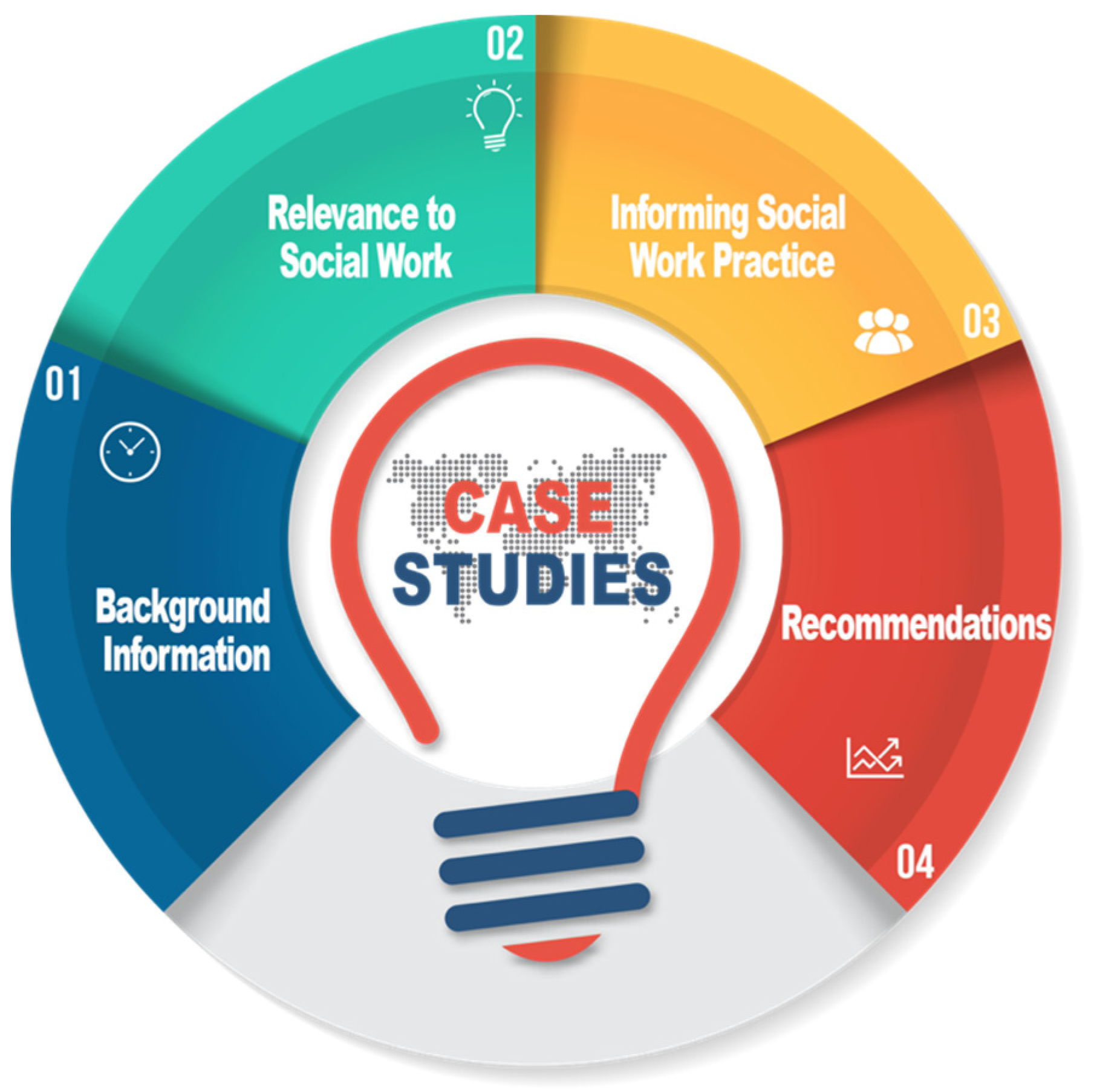
Before diving into topics, most instructors expect a standard social work case study assignment to include:
- Client/system background — demographics, presenting concern, referral source
- Assessment — biopsychosocial factors, strengths, risks, ecological context
- Theoretical framework — e.g., systems theory, ecological model, strengths-based perspective, crisis intervention theory, psychosocial theory
- Intervention plan — SMART goals, evidence-based practice, service coordination
- Ethical analysis — NASW Code of Ethics dilemmas, self-determination vs. protection, confidentiality limits
- Evaluation — outcome measures, reflection, recommendations
Keep this structure in mind as you pick a topic below — the strongest social work case study examples for students are ones where each of these sections has genuine tension to analyze, not a tidy, conflict-free scenario.
Child Welfare Case Studies
Child welfare remains the most heavily assigned specialization in social work case studies help for students, because it sits at the intersection of law, trauma, and family dynamics. In 2026, instructors are increasingly steering students toward kinship care, prevention-focused practice, and the aftershocks of pandemic-era reporting gaps — so a topic that engages with current child welfare data will stand out far more than a generic "child abuse case study."
Real-world anchors to know:
- Programs such as Adelphi University's Real Cases Project and the Alabama Higher Education Consortium on Child Welfare compile authentic
- De-identified child protective services records specifically for classroom analysis
These are excellent reference points for grounding case in realistic practice. The Families First Prevention Services Act (FFPSA) and the growth of kinship-first placement policies (as seen in Los Angeles County's Family Finding initiatives) are also frequently referenced in current coursework.
30 trending child welfare case study topics
- A kinship placement case involving grandparent caregivers and limited state financial support
- Balancing family reunification goals against repeated neglect allegations
- The impact of the Families First Prevention Services Act on a family preservation case
- A child fatality review and its influence on agency policy reform
- Cultural competence in a cross-racial foster placement
- Substance-exposed newborns and mandated reporting decisions
- Educational neglect versus poverty-driven school absenteeism
- A teenager aging out of foster care without a permanency plan
- Sibling separation in emergency removal cases
- Domestic violence exposure and child protective risk assessment
- Trauma-informed interviewing techniques in suspected abuse cases
- A disputed custody case involving allegations of parental alienation
- Immigration status and its effect on a family's access to child welfare services
- Differential response models: investigation versus family assessment pathways
- The ethics of removing a child from a low-income but non-abusive household
- Reunification failure and re-entry into the foster care system
- A case involving a child with disabilities in the foster care system
- Mandatory reporting dilemmas for school-based social workers
- Using the ChildStat model to evaluate caseworker decision-making
- Technology-facilitated child exploitation and interagency response
- Foster-to-adopt transitions and attachment disruption
- Racial disproportionality in child removal rates and agency accountability
- A case study on parental incarceration and its impact on child placement decisions
- Evaluating "reasonable efforts" standards in a family preservation case
- Post-adoption support services and disruption prevention
- Child neglect linked to parental mental illness
- School-based mandated reporter training gaps and missed disclosures
- Court-appointed guardian ad litem decision-making in contested cases
- The role of home visiting programs in preventing child maltreatment
- Multi-agency collaboration between healthcare and child welfare systems
Community Development Case Studies
Community development is where macro social work meets grassroots empowerment. In 2026, Asset-Based Community Development (ABCD) continues to dominate coursework because it reframes communities as holders of assets rather than deficits — a lens instructors love to see students apply critically. Climate resilience, food insecurity, and post-pandemic neighborhood recovery are the fastest-growing sub-themes in this space.
Real-world anchors to know:
- ABCD case studies from the Coady Institute (Egypt, Ethiopia, Guatemala, Taiwan)
- Edmonton's Abundant Community Initiative
- UK-based Voluntary and Community Sector (VCS) partnerships, such as the Plymouth Cancer Champions Project.
- are widely cited because they show asset mapping in practice across very different socioeconomic contexts.
30 trending community development case study topics
- Asset mapping in a low-income urban neighborhood facing disinvestment
- Evaluating the Abundant Community Edmonton model for U.S. municipalities
- Faith-based organizations as community assets in rural development
- Community-led responses to food insecurity and urban food deserts
- Participatory budgeting as a tool for resident empowerment
- Rebuilding social capital after a natural disaster
- Youth-led community organizing against neighborhood violence
- Gentrification and displacement in historically Black or immigrant neighborhoods
- Community health workers as bridges between residents and formal services
- Refugee resettlement and community integration programming
- Rural community development amid population decline and aging demographics
- Using ABCD to address health inequities in cancer care access
- Community land trusts as an affordable housing strategy
- Grassroots mutual aid networks that emerged during COVID-19
- Cooperative economics and worker-owned business development
- Community organizing against environmental hazards (environmental justice)
- Digital divide interventions in underserved communities
- Community policing reform through resident-led advisory boards
- Building social cohesion in post-conflict or post-disaster resettlement zones
- Indigenous community-led development and self-determination models
- Urban agriculture initiatives as tools for community revitalization
- Coalition-building between nonprofits, faith groups, and local government
- Community resilience planning for climate migration
- Small business incubators as neighborhood economic development strategy
- Evaluating consensus-organizing approaches versus conflict-organizing approaches
- Community-based participatory research in a marginalized neighborhood
- Social prescribing programs linking healthcare and community resources
- Volunteer capacity-building in under-resourced nonprofit organizations
- Addressing housing instability through community land banks
- Measuring "soft" outcomes (belonging, trust) in ABCD program evaluation
Mental Health Case Studies
Mental health case studies are among the most requested in social work case study examples mental health, and coursework is shifting heavily toward deinstitutionalization, community-based recovery models, and the funding shifts following recent federal block-grant allocations. Ethical dilemmas around involuntary treatment and patient autonomy remain a perennial favorite for exam-style case analysis.
Real-world anchors to know
- Landmark cases like Rogers v. Okin (patient rights to refuse medication)
- The global deinstitutionalization movement documented by the WHO's World Mental Health Report
- Brazil's psychiatric reform (2001–2024)
30 trending mental health case study topics
- Involuntary commitment and the ethics of the "right to refuse treatment"
- Transitioning a long-term psychiatric patient into supported community housing
- Co-occurring substance use and severe mental illness (dual diagnosis) case management
- Crisis intervention team (CIT) response to a psychiatric emergency
- The impact of SAMHSA block grant funding on local mental health service access
- Community reintegration following long-term institutionalization
- Suicide risk assessment and safety planning in an outpatient setting
- Telehealth-based mental health service delivery in rural areas
- Culturally responsive mental health care for immigrant populations
- Peer support specialists in psychiatric rehabilitation programs
- School-based mental health intervention for adolescent anxiety
- Veteran PTSD case management and VA service coordination
- First-episode psychosis and early intervention program outcomes
- Housing First models for individuals with serious mental illness
- Mental health parity law compliance in insurance-based treatment access
- Postpartum depression screening and intervention in primary care settings
- Trauma-informed care in a domestic violence shelter setting
- Case management for clients with borderline personality disorder
- Barriers to mental health access among LGBTQ+ youth
- The role of family psychoeducation in schizophrenia treatment adherence
- Grief and bereavement counseling following sudden loss
- Ethical dilemmas in mandated mental health treatment for justice-involved clients
- Assertive Community Treatment (ACT) team case coordination
- Digital mental health tools and app-based intervention efficacy
- Burnout and secondary trauma among frontline mental health social workers
- Eating disorder case management within a multidisciplinary team
- Mental health stigma reduction campaigns in workplace settings
- Co-designing recovery plans with lived-experience consumers
- Deinstitutionalization outcomes for aging psychiatric patients
- Integrating mental health services into primary care ("collaborative care" model)
Family Services Case Studies
Family services sit at the emotional core of the profession, and case study assignment social work briefs in this area increasingly ask students to weigh family preservation against child safety — a tension made sharper by the 2018 Families First Prevention Services Act and today's growing emphasis on kinship care. Blended families, co-parenting after separation, and intergenerational trauma are trending strongly in current syllabi.
Real-world anchors to know
- Kinship care data from the Adoption and Foster Care Analysis and Reporting System (AFCARS)
- The Upfront Family Finding Pilot Project in Los Angeles County
- Family preservation program evaluations documented in Social Service Review
30 trending family services case study topics
- Intensive family preservation services for a family at risk of separation
- Kinship caregiver support gaps compared to traditional foster placements
- Co-parenting mediation following high-conflict divorce
- Intergenerational trauma in a multi-generational household
- Supporting teen parents through parenting skills case management
- Family reunification following parental substance use treatment
- Blended family adjustment and stepparent role conflict
- Domestic violence safety planning within a family services framework
- Military family adjustment during deployment and reintegration
- Financial hardship and its cascading effect on family stability
- Family-centered practice for households with a member with a disability
- Addressing parental incarceration's impact on family functioning
- Culturally specific family therapy approaches for immigrant households
- Adoption disruption and post-adoption family support services
- Grandfamilies raising children due to the opioid crisis
- Family group decision-making (family group conferencing) in child welfare
- Supporting LGBTQ+ family units navigating discrimination in services
- Elder caregiving strain within multigenerational family systems
- Family services for households experiencing homelessness
- Sibling reunification after prolonged separation in care
- Parenting capacity assessment in a contested custody case
- Family support services for parents with intellectual disabilities
- Addressing parentification in children of chronically ill parents
- Faith-based family counseling integration with clinical social work
- Family preservation outcomes research: what actually reduces removals
- Navigating mandatory reporting within a therapeutic family relationship
- Family services for refugee households facing acculturation stress
- Coordinating wraparound services for families with complex needs
- The role of home-visiting programs (e.g., nurse-family partnership models) in family stability
- Evaluating "reasonable efforts" documentation in family preservation casework
Social Policy Case Studies
Social policy case studies push students beyond direct practice into systems-level analysis — and 2026 is a particularly rich year for this, with universal basic income pilots, welfare-to-work reforms, and mental health parity enforcement all generating fresh data. These assignments reward students who can connect a policy mechanism to measurable, real-world outcomes rather than abstract theory alone.
Real-world anchors to know
- Universal Basic Income pilots and simulations (including UK SimPaths mental health modeling and Mexico's universal social pension reform)
- The Families First Prevention Services Act
- Ongoing SAMHSA block-grant allocations
These are citable policy case studies well-suited for PESTLE analysis or SWOT analysis case study help-style assignments.
30 trending social policy case study topics
- Universal Basic Income pilots and their effect on mental health outcomes
- Welfare-to-work ("workfare") policy and its impact on single-parent households
- Mental health parity law enforcement gaps in private insurance
- The Families First Prevention Services Act: policy intent versus implementation reality
- Housing First policy adoption and homelessness reduction outcomes
- Paid family leave policy comparisons across U.S. states
- Immigration policy shifts and access to public benefits
- Universal social pension reform and poverty reduction (case comparison: Mexico)
- Medicaid expansion and its downstream effect on behavioral health access
- Child tax credit policy and family poverty rates
- Minimum wage policy debates and their effect on working families
- Criminal justice reform and reentry service policy gaps
- Disability benefits policy (SSI/SSDI) and work disincentive debates
- School voucher policy and equity in low-income districts
- Aging-in-place policy versus institutional long-term care funding
- Opioid settlement fund allocation and community health outcomes
- Refugee and asylum policy shifts and social service access
- Universal school meal policy and child food insecurity outcomes
- Policy responses to the maternal mortality crisis among marginalized groups
- Guaranteed basic income pilot programs in U.S. cities
- Comparative welfare state analysis: Nordic model versus U.S. model
- Policy barriers to kinship caregiver financial support
- Climate policy and its disproportionate impact on low-income communities
- Data privacy policy in digital child welfare case management systems
- Domestic violence policy reform and survivor service funding
- Policy evaluation of mandatory reporting laws and unintended consequences
- Universal childcare policy proposals and workforce participation
- Social Security reform debates and intergenerational equity
- Policy responses to the rise in unaccompanied migrant minors
- Evaluating block-grant funding models versus categorical federal funding for mental health
Why Students Across the World Trust Pragmahelp for Case Study Support
Whether you are a BSW student in the USA, an MSW candidate in the UK, or completing a social policy module in Australia, Canada, the UAE, Germany, New Zealand, Kuwait, Singapore, or Luxembourg, Pragmahelp's academic coaching and editing team understands the nuance a strong social work case study demands. Here is what sets us apart:
- Subject-matter coaching, not shortcuts. Our PhD- and MSW-qualified coaches guide you through assessment frameworks, theoretical grounding, and ethical analysis so your final submission genuinely reflects your understanding.
- AI-free, human-crafted guidance. In a market flooded with AI-generated content, we guarantee human-led coaching and editing — a trust signal that students increasingly seek.
- Plagiarism-free, original work. Every case study concept and structure is developed fresh for you, checked against originality standards before it reaches your inbox.
- Global curriculum familiarity. From NASW Code of Ethics standards in the U.S. to BASW frameworks in the UK and AASW standards in Australia, our coaches tailor guidance to your institution's expectations.
- 24/7 responsiveness. Deadlines do not wait for business hours — and neither do we.
- Beyond case studies. We also support SWOT and PESTLE analysis, case study questions and answers, homework help, and full case study assignment coaching across disciplines.
Ready to strengthen your next social work case study? Place your order with Pragmahelp today and work with a coach who helps you understand the "why" behind every recommendation, not just the words on the page.
Looking for case study help in other disciplines? Explore our guides on business management, nursing, IT, law, and healthcare case studies — all built with the same research-driven, AI-free approach.